


Every great hike starts long before the trailhead. It starts with questions about terrain, temperature and whether that jacket will actually keep you dry.
Many gear questions are based on the destination. A shoe that’s perfect in Arizona can be the wrong call in the Italian Alps, and a jacket that handles a Norwegian drizzle may not stand up to a Patagonian gale. Packing well means understanding the conditions first.
To help, EF Adventures, a small-group active travel company, and outdoor retailer Backcountry.com pooled their trip planning and gear expertise across four standout hiking regions on three continents. Backcountry's in-house gear specialists, many of whom have hiked these routes, shared the three items they consider essential for each place.

Courtesy of Backcountry.com
The American Southwest: Sedona, the Grand Canyon and Zion
Red-rock Arizona, the rim of the Grand Canyon and Utah’s sandstone country at Zion National Park make up one of the most iconic hiking circuits in the United States. This special itinerary in some of the country’s best national parks includes a descent of the Grand Canyon’s Bright Angel Trail and the spiraling, light-filled walls of Lower Antelope Canyon.
The defining conditions here are heat and sun. Shade is scarce, the air is dry, and temperatures climb as you descend into the canyon. The National Park Service notes the canyon floor can run 20 degrees Fahrenheit or warmer than the rim, and every step down is a step you’ll have to climb back up.
What to pack:
- Breathable trail runners. Trail runners over boots in the Southwest breathe better in the heat while still offering strong traction and cushioning.
- A daypack with room for water. Plan to carry more water and snacks than you think you'll need. A comfortable 24- to 26-liter pack works well; vest-style designs with front pockets keep essentials within reach without stopping.
- A lightweight sun hoodie. A long-sleeved, breathable layer with a hood shields your skin from direct sun on long, exposed days, and is often cooler than bare skin.

Courtesy of EF Adventures
Norway: Bergen and the Sognefjord Region
Between the harbor city of Bergen and the Sognefjord, Norway packs an astonishing range of landscapes into a short distance. Travelers can trek across the blue ice of the Jostedalsbreen Ice Cap, mainland Europe’s largest glacier, kayak the narrow, UNESCO-listed Nærøyfjord, and ride gravel along the historic Rallarvegen route near Voss.
Even in summer, conditions shift constantly. Sun gives way to cold fjord breezes, glacier air is chilly, and Bergen is one of the rainiest cities in Europe. Versatility is the name of the game.
What to pack:
- Softshell hiking pants with vents. A stretchy, weather-resistant pant with zippered ventilation can handle a glacier walk in the morning and a bike ride in the afternoon.
- A light fleece pullover. A breathable midlayer, ideally a half-zip, works across the wide temperature swings. Look for one that breathes in the sun but traps warmth when the wind picks up off the water.
- A dependable rain jacket. Rain is likely in Norway. Keep a waterproof shell accessible at all times.
Courtesy of EF Adventures
Italy: The Dolomites
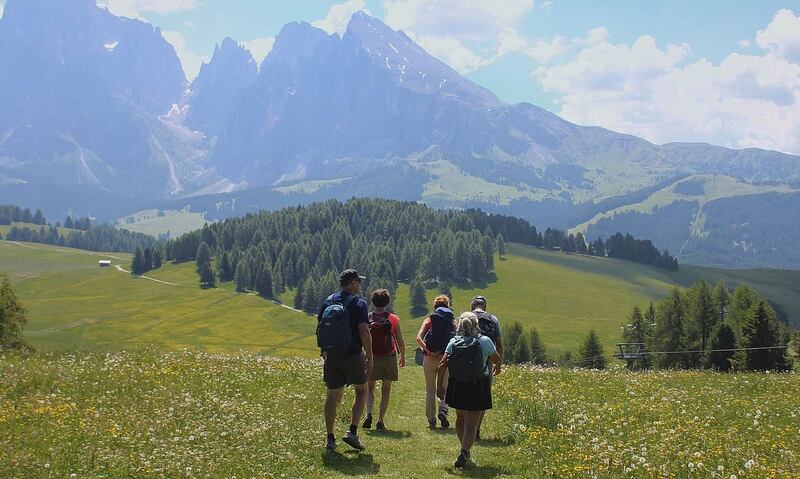
Northern Italy’s Dolomites are a UNESCO World Heritage Site, where jagged limestone peaks tower over wildflower meadows and storybook mountain villages. Classic hikes include the trails around Cortina d’Ampezzo, the loop around the three towers of Tre Cime di Lavaredo, the rolling high meadows of Alpe di Siusi and the dramatic Seceda ridgeline.
Summer brings warm, clear mornings, but afternoon storms can appear seemingly out of nowhere and vanish just as fast. Trails are often rocky, uneven and steep, so footing and stamina matter.
What to pack:
- Waterproof boots with ankle support. Unlike the desert Southwest, the Dolomites reward a sturdier boot. Good grip, a waterproof membrane and ankle support help on loose rocks, wet ground and long descents.
- Trekking poles. Poles reduce strain on the knees and legs, especially on descents, and help keep energy levels up over consecutive big days.
- A packable, breathable rain shell. For storms that roll in fast, choose a jacket that packs down small enough to forget about in your bag and breathes well enough to keep wearing while you're moving uphill.
Courtesy of EF Adventures
Chile and Argentina: Patagonia
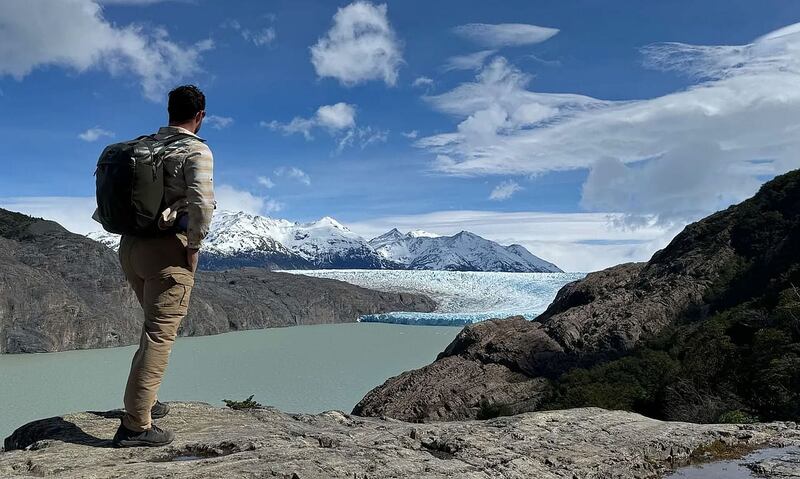
Patagonia is a true bucket-list destination and one of the most demanding hiking regions on Earth. Signature routes include the steep climb to Mirador Las Torres beneath the granite spires of Torres del Paine in Chile and the trek to Laguna de los Tres at the foot of Mount Fitz Roy in Argentina, plus the massive Grey and Perito Moreno glaciers.
Expect long mileage days, remote terrain and famously fierce wind. Weather can turn several times before lunch, cycling between sun, rain and dust-laden gusts.
What to pack:
- Trekking poles. They take the load off your knees, improve balance on rocky ground, and help keep you steady when the wind gusts.
- An ultralight windbreaker. A wind shell that packs into its own pocket becomes one of the most-used pieces in your bag. It blocks Patagonia's relentless wind without the bulk of a full jacket.
- A multi-use neck gaiter. Wind and dust make a lightweight gaiter indispensable. Wear it around your neck, pull it over your nose and mouth during dusty gusts or use it as a headband or hat.
The bottom line
No single packing list works everywhere. Before any big hiking trip, study the specific conditions you’ll face, including temperature swings, precipitation, wind and terrain, and build your kit around them. Review what you already own before buying anything new, and when in doubt, ask someone who has walked the trail.
This story was produced by EF Adventures and reviewed and distributed by Stacker.